What does folk horror mean?
Folk horror is a form of horror built around old places, isolated communities, ritual behaviour and the feeling that the past has not fully died. The fear usually comes from landscape, custom, belief and group pressure rather than a single creature jumping from the dark.
The strongest folk horror feels local. A field, chapel, wood, village hall or old house becomes charged because people have repeated the same gestures there for too long. The horror is not only what happens. The horror is the sense that a place remembers.
Folk horror symbols work well on clothing because they do not need explanation at first glance. A bell, candle, mask or black book reads quickly from across the room, then gets stranger the longer someone looks at it.
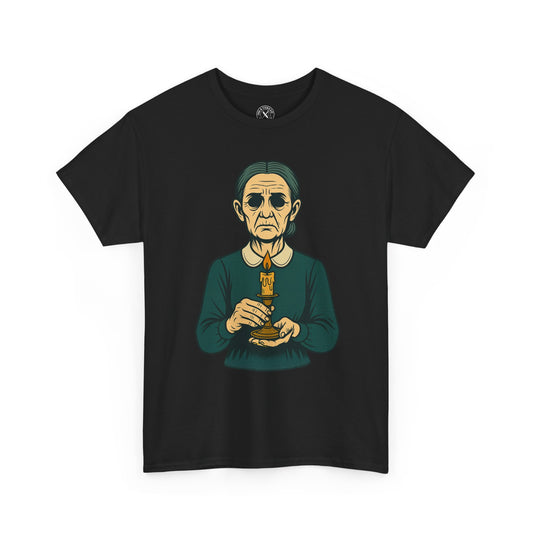
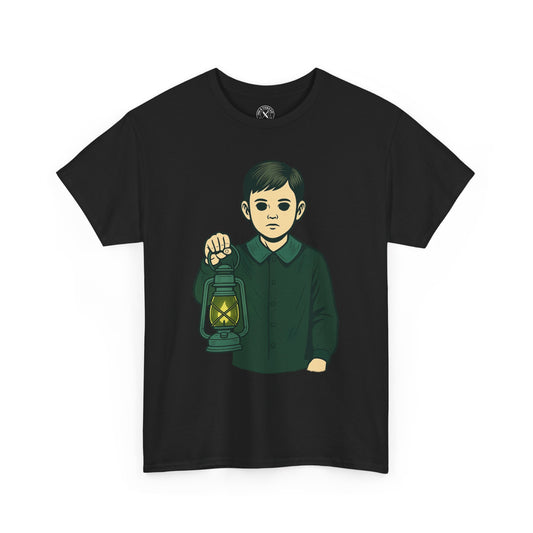
- Candle: vigil, mourning and ritual light. In folk horror, a candle often marks something watched in darkness. Product direction: The Candlebearer and The Lantern Child.
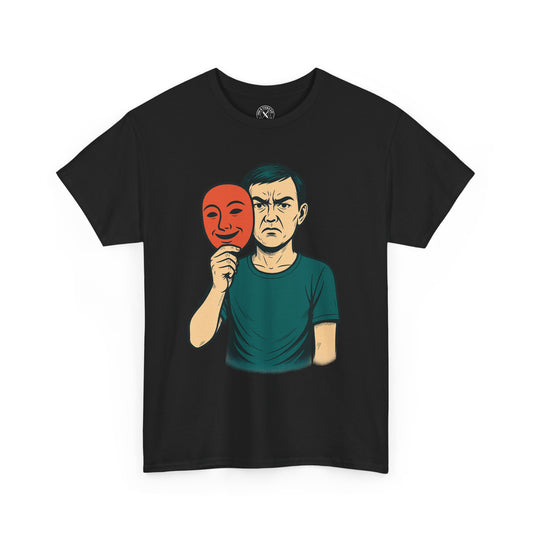
- Mask: hidden identity, role and ceremony. In folk horror, a mask turns a person into a symbol. Product direction: The Mask and The Preacher.
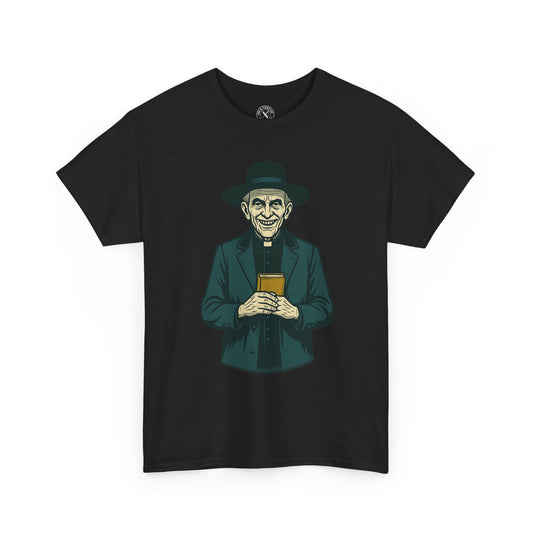
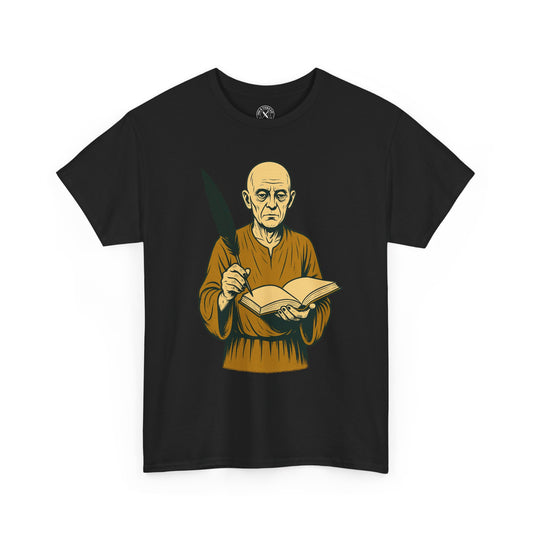
- Book: record, rule and confession. In folk horror, a book can hold old knowledge that controls people. Product direction: The Scribe and The Book.
- Bell: warning, calling and judgement. In folk horror, a bell can gather the village or announce danger. Product direction: The Caller and The Harbinger.
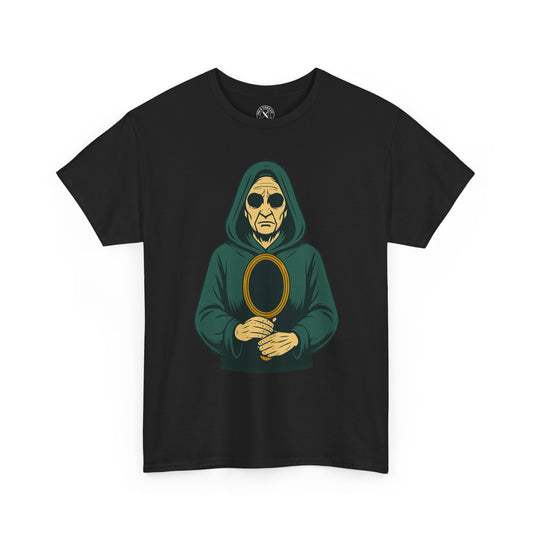
- Veil: concealment, mourning and threshold. In folk horror, a veil keeps the face from the world. Product direction: The Veiled Man and The Widow.
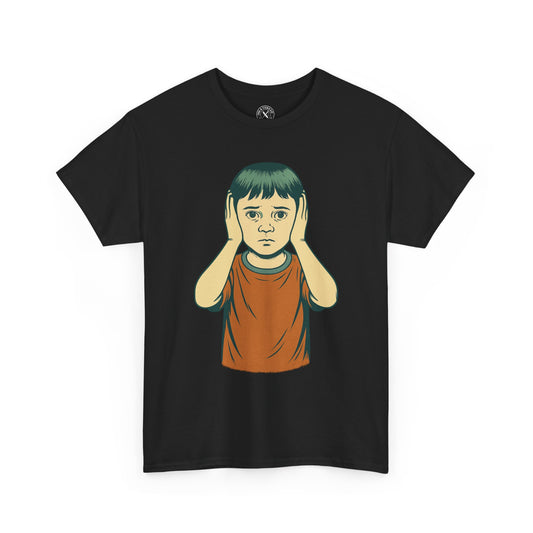
- Eye: witness, surveillance and omen. In folk horror, an eye means something has seen and remembered. Product direction: The Witness and The Listener.