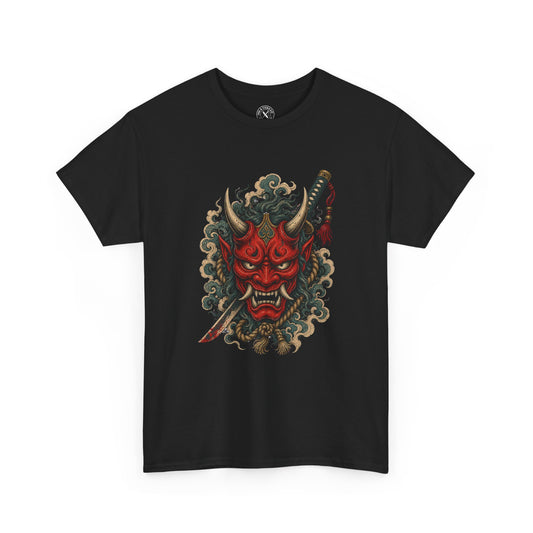
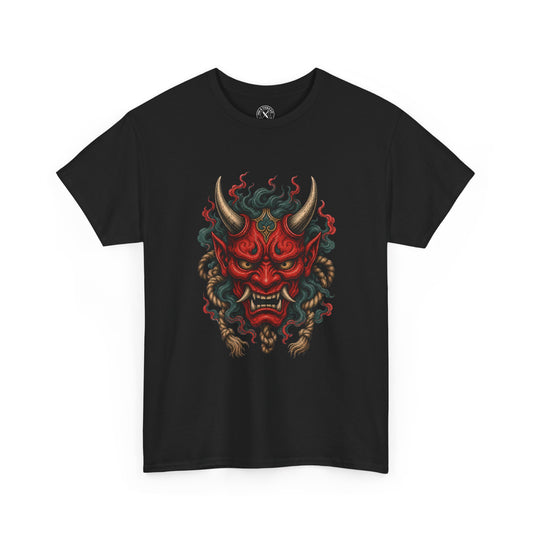
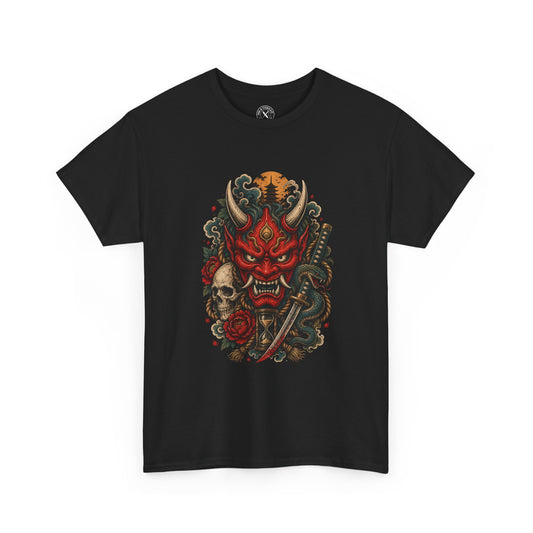
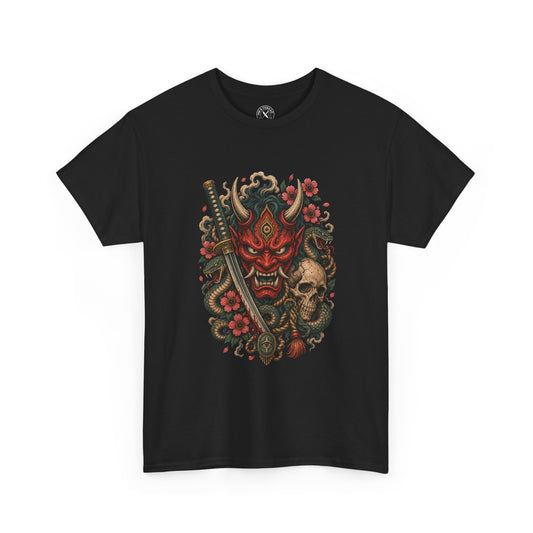
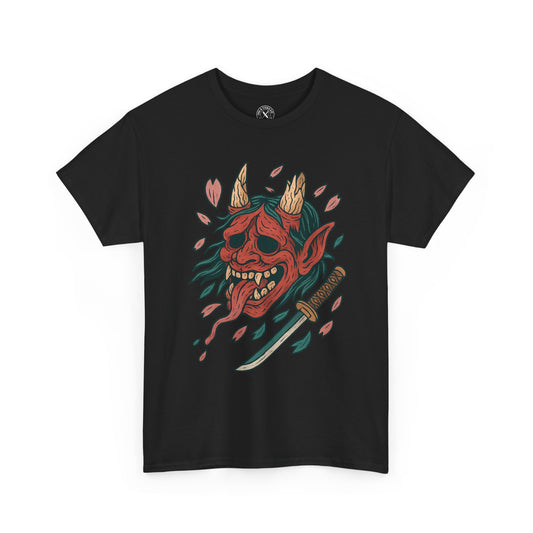
Quick answer. An oni mask tattoo usually represents power, protection, rage, punishment and inner conflict. In Japanese folklore, oni are demonic figures, but tattoo culture often treats the oni mask as more complex than evil. The symbol can show a person facing darkness, carrying strength, or wearing fear as armour.

The oni mask tattoo has weight because it refuses to look harmless. Horns, teeth, grimacing eyes and heavy linework make the face feel dangerous before the meaning even arrives.

The real strength of the symbol is not just fear. The oni mask can represent punishment, protection, anger, discipline, survival and the darker parts of the self that still need a shape. In tattoo culture, that makes it one of the strongest Japanese-inspired motifs for people who want a design with threat and depth.

Ink & Thread treats the oni mask as part of the same visual world as samurai armour, yokai folklore, ghost stories and katana symbolism. The face is brutal. The meaning is sharper than that.

Oni mask tattoo design with horns, fangs and blackwork shadows.

What does an oni mask tattoo mean?

An oni mask tattoo meaning usually centres on power, protection, rage, punishment and inner conflict. The oni mask can act as a warning, a guardian face, or a symbol of the wearer confronting the parts of themselves that are violent, wounded or difficult to tame.

Japanese folklore often presents oni as demonic beings associated with danger, punishment and chaos. Tattoo culture has widened the reading. The oni mask can still look monstrous, but the wearer may use that monstrous face as armour rather than confession.

That tension is why the symbol works so well. An oni tattoo does not need to say the wearer is evil. It can say the wearer recognises darkness, respects it, and refuses to pretend it is not there.

Japanese folklore oni surrounded by clouds, rope and black ink.

What is an oni in Japanese folklore?

An oni is a supernatural being from Japanese folklore, often shown with horns, fangs, wild hair, heavy limbs and a terrifying expression. Oni are commonly translated as demons or ogres in English, but the word carries more cultural weight than either translation can fully hold.

In old stories, oni often appear as violent beings, punishers, spirits of disorder or figures linked to the consequences of human cruelty. Their role can be frightening, but they are not flat monsters. Japanese folklore is full of beings that sit between warning, myth, religion, theatre and local storytelling.

That complexity is useful in tattoo design. An oni face gives the artist a strong visual structure: horns, eyes, mouth, teeth and expression. The folklore gives the image a deeper charge, turning a fierce face into a symbol of consequence.

Oni mask split between shadow and restraint in tattoo linework.

Is an oni mask tattoo good or evil?

An oni mask tattoo is not simply good or evil. The meaning depends on the design, the wearer and the symbols placed around it. An oni can represent a threat, but the mask can also represent protection, discipline, survival or the controlled display of anger.

The mask matters. A bare oni figure can feel like a monster. An oni mask can feel more deliberate, as if the wearer is choosing when to reveal the face and when to keep it contained.

That is why the oni mask often works as a tattoo about self-control. The face shows rage. The tattoo holds it still. The symbol becomes less about losing control and more about knowing what lives under the skin.

What is the difference between oni, yokai and hannya?

Oni, yokai and hannya are related in the wider visual world of Japanese folklore and tattooing, but they are not the same symbol. Yokai is the broadest term. Oni are one type of supernatural figure. Hannya refers to a specific mask tradition tied to jealousy, rage and transformation.

  • Oni: demon or ogre-like supernatural figure. Tattoo meaning: power, punishment, protection and inner conflict. Strong pairings: katana, fire, clouds, rope and skull.
  • Yokai: broad class of spirits, monsters and strange beings. Tattoo meaning: mystery, folklore and the unseen world. Strong pairings: lanterns, smoke, shrines and night scenery.
  • Hannya: Noh theatre mask linked to jealousy and rage. Tattoo meaning: obsession, heartbreak, transformation and emotional violence. Strong pairings: snake, cherry blossom and broken fan.
  • Tengu: bird-like or long-nosed supernatural being. Tattoo meaning: pride, martial skill, warning and mountain spirits. Strong pairings: feathers, mask, staff and wind.
  • Samurai mask: warrior face armour. Tattoo meaning: discipline, honour, intimidation and restraint. Strong pairings: helmet, katana, crest and armour plates.

Hannya deserves its own article because the search data is heavy and the meaning is distinct. For an oni mask tattoo article, hannya should be treated as a neighbouring symbol rather than a second main topic.

Tattoo flash oni mask with horns, fangs and negative space.

Why are oni masks popular in tattoo art?

Oni masks are popular in tattoo art because the design reads instantly. Horns, fangs, eyes and facial tension create a strong silhouette, which matters on skin and on clothing. A good oni mask does not need colour to feel aggressive.

The motif also gives tattoo artists room to push expression. One oni mask can look furious, another can look wounded, amused, protective or cursed. Small changes in the mouth, brow and eyes shift the whole meaning.

The best oni mask designs keep the face controlled. Too much detail can flatten the symbol into noise. Strong black shapes, sharp teeth, clear horns and disciplined negative space keep the mask readable from across the room.

The demon, sharpened

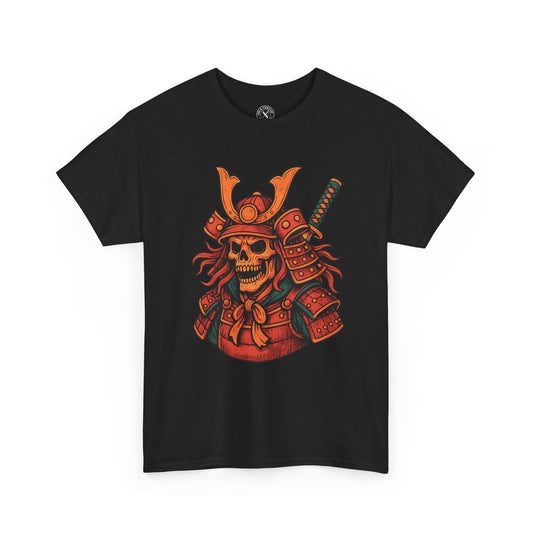
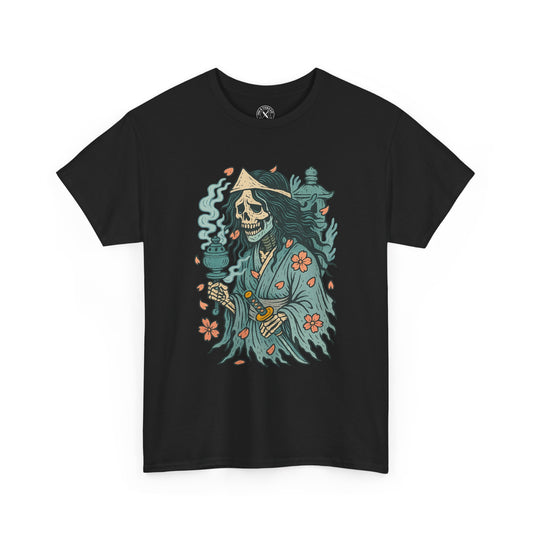
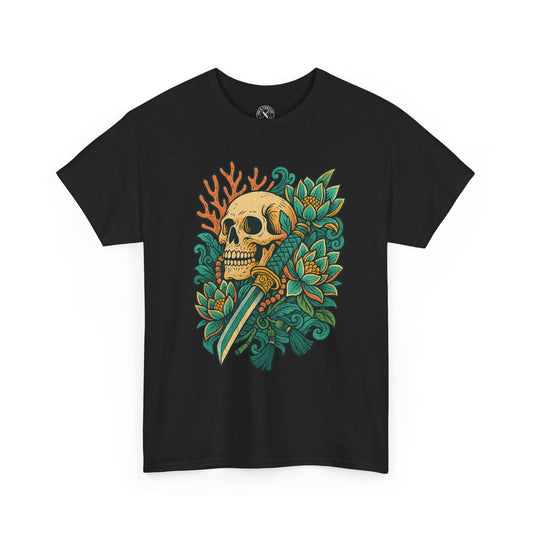
Oni masks, ronin figures and restless spirits from the Curse & Katana collection.

Oni mask with katana, blossom, snake and smoke symbols.

What symbols work with an oni mask tattoo?

The strongest oni mask tattoos pair the face with symbols that sharpen the meaning. A katana turns the mask towards discipline and violence. Smoke or clouds pull the design into folklore. Rope can suggest binding, punishment or ritual control.

Cherry blossoms create contrast because their softness cuts against the demon face. A skull pushes the design towards mortality. A snake adds danger, transformation and watchfulness. A samurai helmet makes the image feel more martial, while a lantern or shrine can connect the oni to the wider yokai world.

The right pairing depends on the story the wearer wants the tattoo to carry. An oni with a katana feels different from an oni with blossoms. One leans towards threat. The other lets beauty and violence sit in the same frame.

Oni mask graphic tee concept with blackwork Japanese folklore symbols.

How does oni symbolism connect to dark streetwear?

Oni symbolism works on dark streetwear because the face carries meaning before the viewer reads a word. The mask is built for contrast: black fabric, white linework, hard expression and a shape that does not disappear at distance.

Curse & Katana sits in that space. Oni masks, ronin figures, yurei spirits and Japanese folklore motifs all carry the same visual discipline: threat under control. The artwork does not need slogans because the symbols already speak.

That is why Oni's Last Laugh works as a centrepiece for the collection. The design takes the familiar demon mask and makes it wearable without softening the face. The expression stays sharp. The symbol stays dark.

Frequently asked questions

What does an oni mask tattoo mean?

An oni mask tattoo usually means power, protection, rage, punishment or inner conflict. The mask can show a person confronting darker instincts rather than being controlled by them. In tattoo culture, the oni face often works as armour: frightening on the outside, disciplined by the fact it has been turned into a symbol.

Is an oni tattoo bad luck?

An oni tattoo is not automatically bad luck. The meaning depends on personal belief, cultural context and the way the design is used. Some people read oni as dangerous or demonic figures, while others use the mask as a protective or confrontational symbol. The safest reading is not luck, but force: the tattoo carries a heavy, aggressive meaning.

What is the difference between an oni and a yokai?

Yokai is a broad term for supernatural beings, spirits, monsters and strange figures in Japanese folklore. Oni are one type of supernatural being within that wider world. A yokai tattoo can cover many symbols, while an oni tattoo usually focuses on the horned demon or mask associated with violence, punishment, protection and inner conflict.

What is the difference between an oni mask and a hannya mask?

An oni mask usually represents a demon or ogre-like supernatural figure. A hannya mask comes from Japanese Noh theatre and is linked to jealousy, rage, heartbreak and transformation. Tattoo culture often places the two close together visually, but the meanings are different enough to deserve separate treatment.

What should you pair with an oni mask tattoo?

Strong oni mask tattoo pairings include katana, smoke, clouds, rope, cherry blossom, snake, skull, samurai helmet and shrine imagery. Each pairing shifts the meaning. A katana makes the design feel disciplined and violent. Cherry blossom adds fragility. A snake brings danger and transformation.

Oni masks, made to wear

Oni masks last because they do not pretend darkness is simple. The symbol can be fear, protection, punishment, rage or discipline depending on who wears it and what sits around it.

For Ink & Thread, that makes the oni mask a natural part of Curse & Katana: Japanese folklore, warrior imagery and dark graphic tees built around symbols with teeth.

Folklore, cut in black

Curse & Katana turns demon masks, warrior tradition and ghost-story symbolism into dark graphic tees.

Explore Curse & Katana
Back to blog