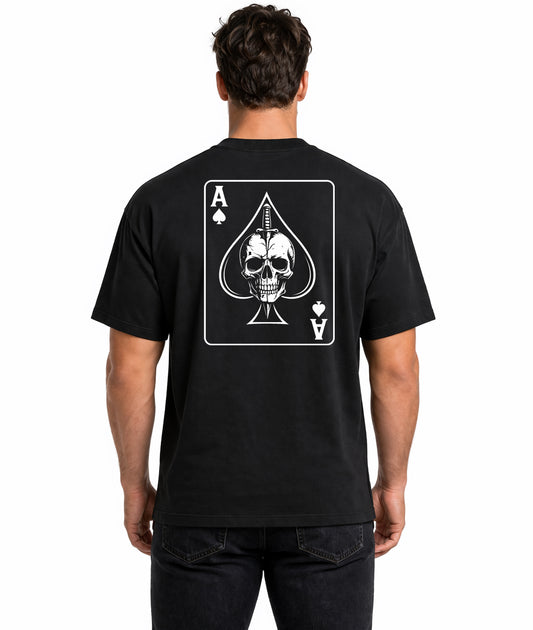
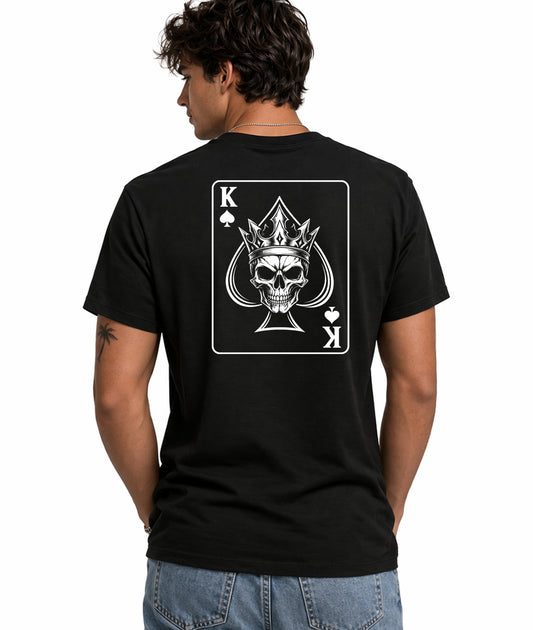
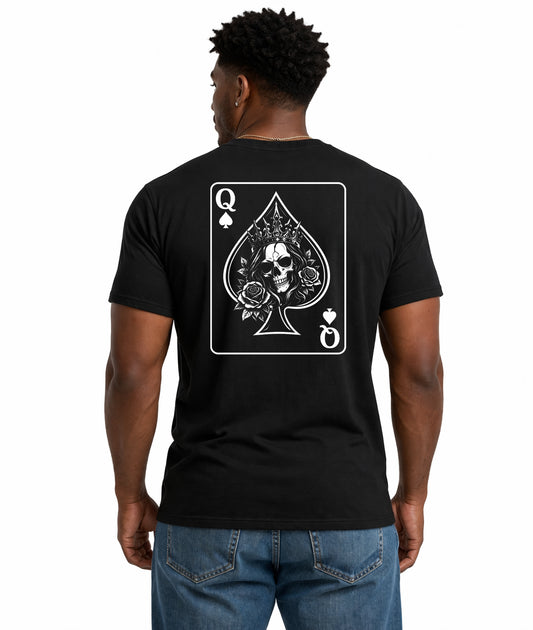
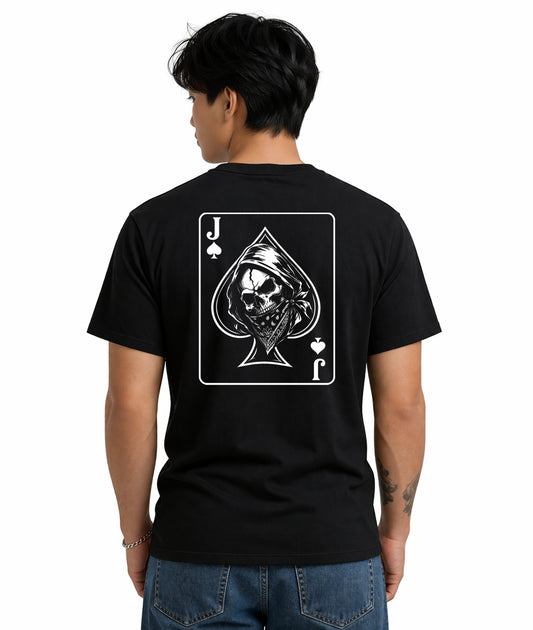
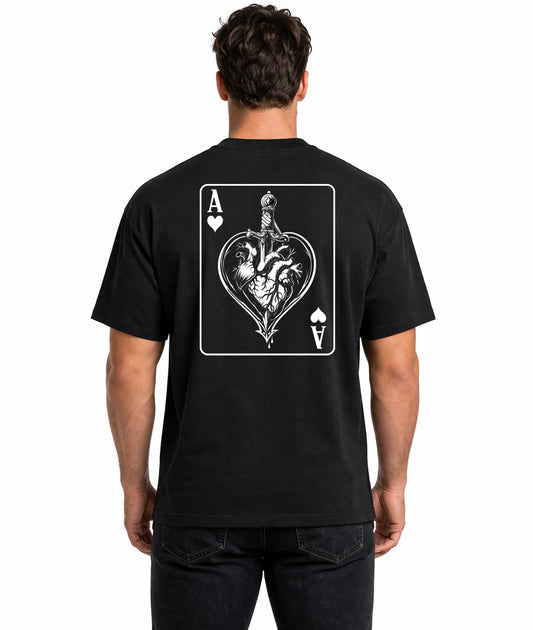
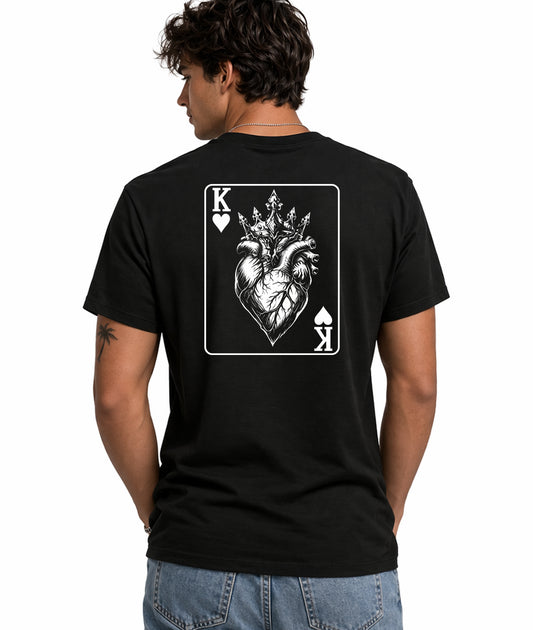
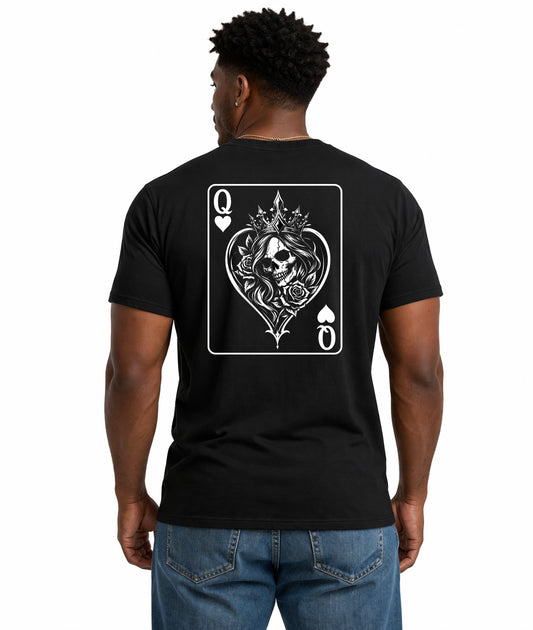
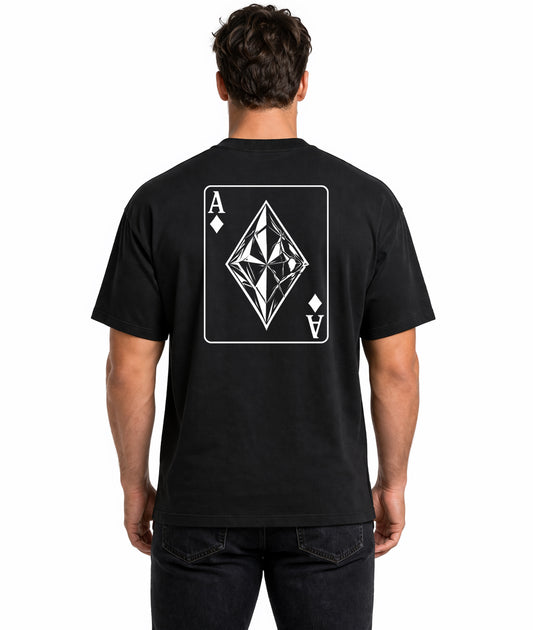
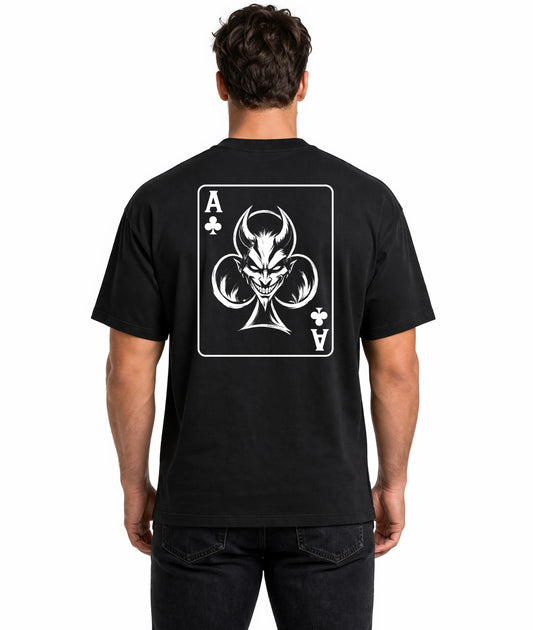
Quick answer. The four playing card suits each carry a distinct symbolic meaning. Spades represent death, intellect, and shadow. Hearts represent love, emotion, and loss. Diamonds represent wealth, value, and material power. Clubs represent conflict, action, and earned strength. Together, the suits turn a deck of cards into a symbolic system.

A deck of cards is never just a deck of cards. The playing card suits have carried meanings for centuries, moving through gambling tables, fortune-telling traditions, tattoo flash, and gothic design without losing their edge.

Spades, hearts, diamonds, and clubs look simple because they have been sharpened by time. Each suit is a small symbol with a large shadow behind it — death, love, wealth, conflict. The whole human mess, packed into fifty-two cards.

Four playing card suit symbols — spades, hearts, diamonds, clubs — in bold tattoo-flash composition

What Do the Four Playing Card Suits Mean?

The four playing card suits mean four different forces. Spades represent death, intellect, endings, and shadow. Hearts represent love, emotion, devotion, and loss. Diamonds represent wealth, value, status, and material power. Clubs represent conflict, action, labour, and earned strength.

Those meanings are not fixed in one single tradition, but they are consistent enough to matter. In cartomancy, tarot-influenced readings, and modern symbolism, the suits behave like four rooms in the same house. Each one deals with a different kind of pressure.

Spades cut. Hearts bleed. Diamonds glitter. Clubs strike. That is the deck at its simplest.

Older European card symbols — swords, cups, coins, batons — in vintage woodcut tattoo style

Where Did Playing Card Suits Come From?

Modern French-suited cards gave us the familiar spade, heart, diamond, and club shapes. Older European decks used other suit systems — swords, cups, coins, and batons in Italian and Spanish traditions, and leaves, hearts, bells, and acorns in German decks.

That older symbolism never fully disappeared. Spades still carry the shadow of swords. Hearts still echo cups, emotion, and the inner life. Diamonds still connect to coins, value, and worldly possession. Clubs still hold the force of batons, work, growth, and impact.

This is where playing card symbolism gets its depth. The symbols look minimal now, but they come from older images that were far less abstract. The old objects are still under the surface.

Spade suit symbol with skull and shadow elements in bold tattoo-flash blackwork

Spades: Death, Intellect and Shadow

The spades cards meaning is the darkest in the deck. Spades are tied to death, intellect, hard truth, conflict, and the things people usually try to avoid. They are the suit of endings, judgement, and shadow.

That is why the Ace of Spades has such a heavy reputation. The Ace is the purest form of the suit, so the Ace of Spades becomes the clearest expression of spade energy — finality, power, and the confrontation with mortality.

In tattoo language, spades work because they are readable and ruthless. The shape is sharp enough to stand alone, but it also holds skulls, crowns, daggers, smoke, and other dark symbols without collapsing under them.

Anatomical heart with roses and thorns representing the heart suit in dark tattoo style

Hearts: Love, Loss and Emotional Truth

Hearts are often reduced to romance, but the suit is heavier than that. Hearts represent love, emotion, attachment, grief, devotion, and the cost of feeling anything fully.

In older symbolic systems, hearts sit close to cups — the suit of emotion, intuition, relationships, and the inner life. That is why heart imagery becomes stronger when it stops being cute. The anatomical heart, the pierced heart, the bleeding heart, and the thorn-wrapped heart all tell the truth better than a neat valentine shape.

Crown & Bone's Hearts designs lean into that darker emotional register. Love is not softened. It is shown with bone, roses, and anatomy. The suit is not about romance as decoration — it is about what love leaves behind.

Love, cut darker

The Hearts suit turns emotion into bone, roses, and blackwork built for fabric.

Diamond suit symbol with skull and glittering geometric facets in gothic linework

Diamonds: Wealth, Value and Its Cost

Diamonds are the suit of value. They point to money, wealth, status, trade, possessions, and the question that sits under all of it — what is something worth, and what does it cost to want it?

In older suit systems, diamonds connect naturally to coins. That link gives the suit its material weight. Diamonds are not about emotion or death. They are about the world you can hold, own, sell, lose, or be owned by.

That makes diamonds interesting inside gothic design. Wealth is never neutral in dark symbolism. It glitters, but it also corrupts. It attracts, but it also traps. A diamond can read as beauty, obsession, ambition, or greed, depending on how the design frames it.

Club suit symbol with branches, thorns, and action-driven linework in tattoo-flash style

Clubs: Conflict, Action and Earned Power

Clubs are the suit of action. They represent force, labour, movement, conflict, growth, and the kind of power that is earned by impact rather than inherited by rank.

The club shape has several symbolic shadows behind it — batons, staffs, branches, and blunt instruments. That makes the suit feel more physical than diamonds and less fatal than spades. Clubs are not the end. They are the fight in the middle.

In a deck, clubs bring momentum. They do not sit still. They push, strike, grow, and return. In visual design, that gives the suit a rougher edge — wood, thorn, bone, and motion rather than polished geometry.

Joker card with jester skull and trickster iconography outside the four-suit system

The Joker: The Card Outside the Suits

The Joker does not belong to any suit, which is exactly why it matters. It sits outside the system — neither spade, heart, diamond, nor club. In games it can be wild, useless, powerful, or ignored entirely, depending on the rules.

Symbolically, the Joker card meaning carries trickster energy. It is the fool, the mask, the wildcard, the figure that can break the structure because it was never fully inside it. Where the suits divide the deck into four forces, the Joker interrupts the whole arrangement.

That makes it one of the strongest cards for gothic streetwear. It does not ask for order. It thrives in the part of the deck where order fails.

Crown and Bone deck spread showing skull aces and court cards in tattoo-flash style

How Crown & Bone Wears the Deck

Crown & Bone takes the old suit system and rebuilds it through skulls, crowns, bones, roses, anatomical hearts, and hard black linework. The collection works because the symbols were already strong before they reached the fabric.

Spades bring death and power. Hearts bring love and loss. Diamonds bring value and obsession. Clubs bring action and force. The Joker brings the crack in the system. Together, they stop being separate graphics and become a deck with a point of view.

That is the difference between a card print and a collection. One decorates a shirt. The other carries a language.

The whole deck, rebuilt

Every card in Crown & Bone carries its own piece of the same dark language.

The full Crown & Bone deck

Four suits, one Joker, and a collection built on skulls, crowns, tattoo linework, and centuries of playing card symbolism.

Shop the Crown & Bone Collection

The whole deck — spades, hearts, diamonds, clubs, and the Joker. Built for black. Designed to last.

See the Crown & Bone Collection
Back to blog