Quick answer. The Ace of Hearts represents love, new beginnings, deep emotion, and the start of something that matters. As the lead card of the heart suit, it carries joy and vulnerability in the same hand. In cartomancy, it often points to romance, family, reconciliation, or a feeling that has only just begun.

The Ace of Hearts is the brightest card in the deck. The ace of hearts meaning sits at the start of something — love, emotion, family, beginnings — and carries every promise that comes with them, including the risk that the promise might break.

Aces are first cards. They carry the whole suit in a single symbol. Place that energy inside Hearts and it becomes warmth, openness, and the willingness to feel something fully. Hearts move through emotion the way Spades move through truth — directly, and without hiding what they are.

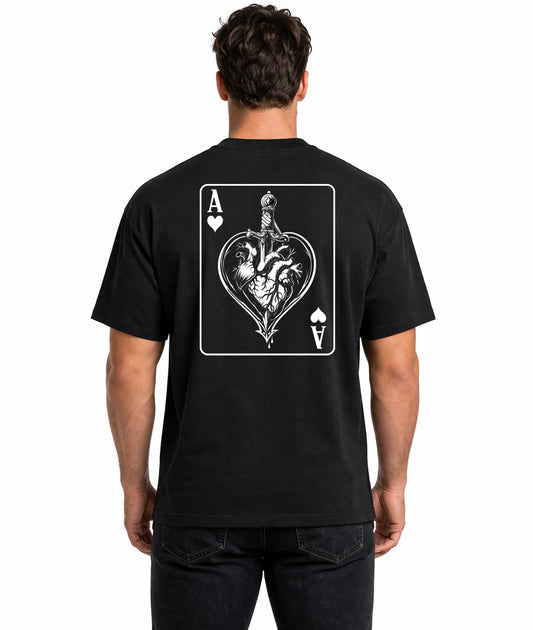
Anatomical Heart Card illustration for the Ace of Hearts meaning article, Ink & Thread

What Does the Ace of Hearts Really Mean?

The ace of hearts meaning is love, new beginnings, openness, vulnerability, and the start of strong emotion. It is the lead card of the heart suit, so it carries everything Hearts represent at full strength — feeling, connection, family, and the weight that arrives the moment something matters.

Aces are about origin. They are the spark before the suit unfolds. The Ace of Hearts is the moment a feeling begins, before it has been tested, defended, or proven. That is what gives the card its weight. It is not the long story of a relationship. It is the first beat.

Read positively, the card suggests love, reconciliation, family, joy, and the courage to feel openly. Read with caution, it can suggest infatuation, naivety, or a feeling exposed before it is ready to be seen. The card itself does not warn of either. It simply means the heart has entered the room.

Cartomancy illustration for the Ace of Hearts meaning article, Ink & Thread

Ace of Hearts Card Meaning in Cartomancy

In cartomancy, the ace of hearts cartomancy reading often points to love, family, friendship, reconciliation, joy, or the start of an emotional cycle. It is one of the most welcomed cards in the deck — the card that softens a hard spread and quickens a slow one.

The card can describe a person, a relationship, or a state. As a person, it can suggest someone open, generous, romantic, or trusting. As a relationship, it can describe early connection, renewed warmth, or the first stirring of attachment. As a state, it can describe a heart that has decided to feel again after a period of distance.

The Ace of Hearts is not blind. Cartomancy treats it as the start of a feeling, not the proof of one. The surrounding cards decide whether the feeling holds. The Ace promises an opening. It does not promise the ending.

Hearts Spades illustration for the Ace of Hearts meaning article, Ink & Thread

Hearts and Spades — The Two Poles of the Deck

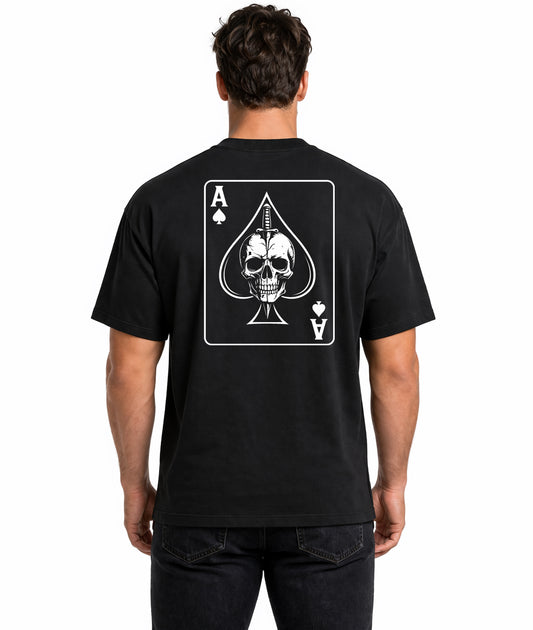
Every ace tells the deck what its suit is going to mean. The Ace of Hearts and the Ace of Spades sit at opposite poles of the same deck — love and death, beginning and ending, the start of feeling and the moment feeling stops.

Hearts begin. Spades close. Hearts open. Spades cut. They are not opposites in the sense of cancelling one another out. They are partners. The Ace of Hearts only carries weight because the Ace of Spades exists, and the Ace of Spades only carries finality because something living once started in the Hearts.

Crown & Bone leans into that pairing. The Ace of Hearts wears an anatomical heart, every chamber drawn. The Ace of Spades wears a skull. One says here is what is alive. The other says here is what remains. Worn together, they tell the whole story of the deck.

Tattoo Flash illustration for the Ace of Hearts meaning article, Ink & Thread

The Ace of Hearts in Tattoo Tradition

In tattoo flash, the heart has always been a foundation symbol. Sailors carried it for someone they had left behind. Memorial work has used it to mark the dead. Sacred-heart imagery brought the organ into religious art, complete with flames, thorns, and light. The heart is one of the few symbols that holds love and grief without changing shape.

The ace of heart tattoo meaning sits inside that tradition. As a tattoo, the card can stand for a relationship, a person who has been lost, a vow, a family bond, or the moment a heart was changed by something. The anatomical version — chambers, ventricles, arteries — adds a layer the Valentine heart cannot carry. It says the love is real enough to bleed.

That is why the Ace of Hearts works as gothic flash. It is not a soft symbol when it is drawn properly. It is a working organ wearing the suit of feeling, and the suit is heavier than it looks.

T-shirt design for the Ace of Hearts meaning article, Ink & Thread

How Crown & Bone Reimagines the Ace of Hearts

Crown & Bone treats the Ace of Hearts as the working version, not the symbolic one. The design does not sit inside the cartoon-Valentine heart that the rest of fashion defaults to. It uses the anatomical heart — chambered, drawn, and rendered in the same blackwork language as the rest of the deck.

That changes the meaning. The card becomes about the real thing rather than the shorthand. Love that has weight, rather than love that looks pretty on a card. The ace suit symbol stays — the single heart at the centre of the card — but the heart inside it is the one that beats.

On black fabric, the contrast does the work. The linework reads. The anatomical detail keeps the card honest. The Ace of Hearts becomes the card that says here is what feeling actually looks like — chambered, working, and not always tidy.

The four aces, rebuilt

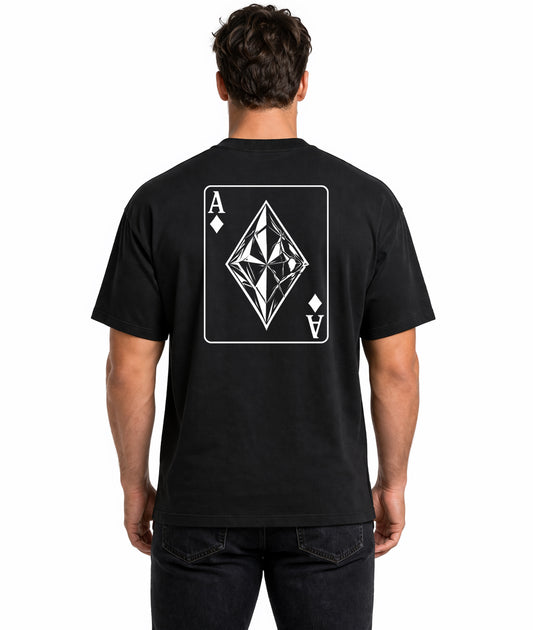
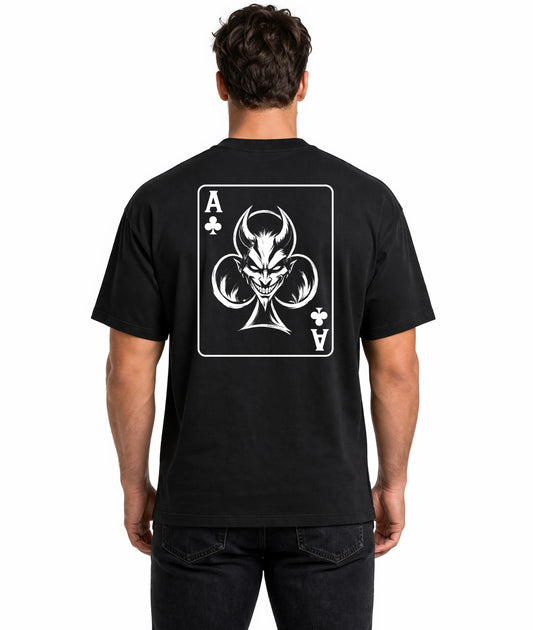
One ace for each suit. Hearts, Spades, Diamonds, Clubs — the four corners of the deck in Crown & Bone blackwork.

The card with a pulse

The Ace of Hearts carries love, loss, and the start of feeling in a single suit. Crown & Bone turns that weight into blackwork built to be worn.

Shop the Crown & Bone Collection

Spades, hearts, diamonds, clubs, and the Joker. Built for black. Designed to last.

See the Crown & Bone Collection
Back to blog